The 25th Annual Putnam County Spelling Bee

Event: The 25th Annual Putnam County Spelling Bee
Venue: Creative Cube @ Lasalle College of the Arts
Run: 14th Sept – 18th Sept 2010
Don’t let the seemingly low-budget production and its lack of publicity fool you.
Because what it lacked in grandeur and glitz, it certainly more than made up for in quality and warmth.
This production of the Broadway musical “The 25th Annual Putnam County Spelling Bee” (which was once directed by James Lapine, no less) is a thoroughly delightful and entertaining effort by the students, staff and alumni of the Lasalle College of the Arts Musical Theatre Programme, and once again reminded me of the sheer beauty and power of the musical theatre artform.
It was staged in a relatively small venue known as the “Creative Cube” at Laselle, but they certainly used it very well and squeezed every last ounce of usability from the venue.
It was as if the production filled up the entire room and more, and you could easily envision it being translated to greater and more spectacular effect at larger venues.
This was definitely one of those productions that far exceeded my expectations, and sadly, I can’t really remember the last time I said that for any production I’d watched.
The cast were mostly (I’m guessing) American, and they were very very good, both in comic delivery and singing ability.
Something has to be said about how they seem to excel especially in the musical theatre artform, and objectively speaking, if their roles were played by us locals I doubt if the delivery would have been as good.
I’m not trying to put down local talent, but I’m just saying that for this particular production, I don’t think Asians would have been able to pull it off as convincingly.
It’s also because the book was very American in nature (the “Spelling Bee” is, after all, an American institution, and musical theatre is, after all, an American artform), and because many of the lines had a distinct American flavour to them, if it were played by any other people, I doubt they would have been able to carry off the lines as convincingly.
While all the actors were fantastic, I thought Simon Thompson was mesmerising in his portrayal of the geek named William Barfee.
The premise of the musical is simple: The entire show takes place in the gymnasium of a typical American high school, where the spelling bee contest is held.
Each of the contestants has their own bizarre quirks and idiosyncrasies (as would be expected of a comedy musical), and as they each take their turns to go up to spell, they would inevitably reveal insights into their personal lives.
One by one, the contestants would be eliminated, until we arrive at the eventual winner.
But it is not merely a contest that we’re witnessing.
We’re also gaining valuable glimpses into the contestants’ lives – their hopes, dreams and insecurities – and when the contest ends, we’re made to feel as if we’ve all taken this long emotional journey with the entire cast.
Overall, a very enjoyable night of musical theatre and you would be hard-pressed to find such delightful musical theatre offerings in Singapore.
Sometimes you just have to search hard enough.
Blackbird
I can’t decide if this 75-min long play was good or bad. It’s about a woman’s (Una played by Emma Yong) confrontation with the man (Ray/Peter played by Daniel Jenkins) who ‘abused’ her when she was 12. I was actually expecting a psychological thriller from the synopsis (and they made reference to Pillow Man, which unfortunately I missed…twice), but it wasn’t. So its appeal might have diminished for me in that sense (I was so looking forward to a psychological thriller).
Dialogue heavy, the whole play is set in a messy pantry of a factory that Jay/Peter worked (or some place). The messiness probably set the mood too. The 2 characters recount their lives that led to the incident when they “eloped”, slept together and separated, and the aftermath of that. However, it was pretty heavy and taxing on both the actors and audience (needed to focus on what they were saying since the whole play is really the dialogue between the 2).
Personally, I felt the interesting part was the way the play unfolded. As the story progressed, the audience’s paradigm/perception is made to change as the characters told their stories. Initially, it all seemed like the man’s fault/responsibility, then it shifts focus onto the woman and it becomes blur. Not really sure how to describe it, but I found myself thinking differently of the characters as it went along. It started out as what seemed to be a normal love story of a man leaving a woman, then it turns out that it’s about pedophilia, but then again is it?
There are actually 2 ways to look at the play. “Innocent” and sinister. “Innocent” in that it was really a mis-communication back then and the man is really a changed man. Not that I agree with an older man taking advantage of a minor coz it’s still wrong. But not like what I’m going to say next…Sinister in that he has not changed and all he was telling Una were lies, using what she readily supplied to cook up the stories, and he is a real pedophile, with the next target his girlfriend’s daughter. Personally, I wish to take the “innocent” standpoint (prefer to be hopeful).
Another interesting point my friend raised was how the 2 characters lives unfolded due to the incident at that turning point at the guest house when they separated and never met till now (for 15 years?). What if?
“Blackbird” by The Singapore Repertory Theatre

Event: Blackbird
Venue: DBS Arts Centre
Run: 15th Sept – 9th Oct 2010
Whenever I hear the word “blackbird”, I think of the lovely Paul McCartney song.
Anyhow, the play “Blackbird” sings a completely different tune.
It is written by Scot David Harrower, and was a winner of the 2007 Lawrence Olivier Award for Best New Play, no less.
This particular production stars Emma Yong and Daniel Jenkins, and is directed by Tracie Pang.
It would also be the same ill-fated production that was slated to open on 6th March this year (hence the wording in the pictorial above), but had to be postponed till this week due to the unusual circumstance of actor Patrick Teoh (initially cast as the male lead) declaring that he felt he was unable to fulfill the demands of the role.
And after watching the play, one could probably see where he was coming from.
The play is essentially a 75 min depiction of two people – Ray and Una, and their encounter in what looks like an extremely filthy and under-maintained pantry of a small run-down office building.
After 15 years of being apart, Una comes looking for Ray at his workplace and hence begins the process of truth-seeking, confrontation, confession, and closure(?).
They had once maintained an illicit relationship, and have been made to suffer the consequences ever since that fateful period 15 years ago.
What transpires next is a series of chilling twists and turns as the details of their sordid past begins to unravel.
Credit goes to Daniel Jenkins for digging deep to produce an extraordinarily layered performance.
I thought he played it masterfully.
The play was both fascinating and intense.
It asked the usual questions that surround most plays that deal with illicit affairs – Who is the culprit? Who is the victim? Who has suffered more? Is there necessarily a clear-cut right and wrong in the relationship?
I liked how Harrower slowly teased us by choosing to reveal morsels of new information into their history as the play moved along, thus ensuring that the audience is continually kept alert and engaged.
It is essentially just two people in the same room for 75 mins, but truth be told, it never did feel that long.
The play is extremely powerful and hard-hitting, and after it ends it feels as if you’ve just taken a big blow to the head.
One of the more engaging plays I’ve seen in awhile.
One thing I couldn’t really understand was the significance of the title “Blackbird”, as I had not heard it being used in the play at all.
But that’s just me being ignorant.
I recommend you go catch the production.
It was opening night tonight and the turnout was barely past 60%.
I think “Blackbird” definitely deserves better patronage than that.
Thoughts on “Descendants of the Eunuch Admiral”
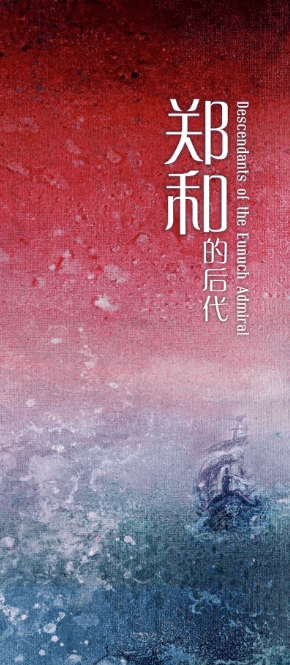
Event: Descendants of the Eunuch Admiral <郑和的后代>
Venue: Drama Centre Theatre
Run: 9th Sept – 18th Sept 2010
What to make of this production?
Let’s just say that a combination of a one-tenth filled Drama Centre, with the overbearing topic of castration (*wince*), with abstract contemporary theatrics featuring ten actors often screaming at the top of their voices in collective disorientation, with a 105 min performance that does not offer an intermission doesn’t exactly make for comfortable viewing.
I was particularly dismayed at the poor turnout.
This was the most empty I have ever seen the Drama Centre in my entire life.
Granted, it was a Tuesday evening, but a one-tenth filled Drama Centre just doesn’t bode well for the state of local Chinese theatre.
Was it the lack of publicity?
Was it the alienating (and discomforting) subject matter?
Was it the lack of a big name cast?
Was it the fact that it was a Chinese play?
Who knows.
But if this is the kind of turnout for a Kuo Pao Kun play, then one shudders to think what might be if it were any other Chinese playwright.
Perhaps the Drama Centre might have been too large of a venue for this production.
As for the production, well…what can I liken it to?
Perhaps it’s like sitting through a Stravinsky piece – abstract, disorientating, terrifying, puzzling and intellectual all at the same time.
Maybe this is what “contemporary theatre” is all about.
Not really my kind of thing, but enlightening nonetheless.
I suppose you could draw a number of parallels from the play, but after awhile it all just became too heavy for me.
Ilkosa is much better at grasping the abstract than I am, but even she admitted that much of the play was a bit too abstract for her to grasp, ha!
《郑和的后代》(Descendants of the Eunuch Admiral)
I don’t know if I’m “dull” or the production too contemporary (abstract), but I spent the most part of the show wondering why it was called “Descendants of the Eunuch Admiral”. To me, it was more of an interpretation of how Zheng He actually felt being a eunuch (or other eunuchs at that) with a description of the various methods of castration. I’ve not read the text before, but if it was meant to relate to other social issues, or tell some other story, I didn’t see it. There were some parts that didn’t seem they were portrayed appropriately, somehow casting a negative light on Zheng He, and at some points like a 闹剧, e.g. the part on the years of the 7 times Zheng He 下西洋. It failed to engage. The set was pretty impressive though, simple as it looked, and the opening “sea roar” was anticipatory.
Ah well, I went in not knowing what to expect, and came out feeling it was not what I expected (…I know, what I just said doesn’t make sense).
Ok, I shan’t spend too much time on this.
Monologues
Talking about monologues, what does it take for someone to play a monologue?
Depending on the book, it seems like a display of schizophrenia on stage. How do you appear convincing switching between roles? It’s difficult to get into character for each since you have to be mindful about switching roles during the act. So the actor will need a certain amount of tenacity.
I can’t help but think of Emily of Emerald Hill, a rather well-known local monologue play. Margaret Chan did a pretty good job (I’ve not seen others, but will catch the Ivan Heng’s portrayal that’s showing next year). I realised that it was essentially playing the same character, except at different stages of Emily’s life. The audience needs to “transport” themselves along with the character. So does this makes it easier? A single character portrayal?
I believe the book plays a part too. You need a defining characteristic of each persona, which will need to be drawn from the book. So the actor will need to pick out that defining characteristic to emphasize, and use it to his/her advantage so that the audience can tell when the actor switches.
Just some thoughts.
Someday, Samsara

Event: Someday, Samsara
Venue: Play Den @ The Arts House
Run: 8th Sept – 12th Sept 2010
When it comes to a play that portrays the pain and torture that is associated with the Chinese Ten Courts of Hell, it would be highly tempting for a reviewer to look into his/her bag of tricks and pull out an arsenal of clever puns that play on the whole theme of “hell” when critiquing it, especially so when you take into account the fact that the play didn’t exactly garner very glowing reviews from Adeline Chia in yesterday’s Life! as well as from Ng Yi-Sheng on the Inkpot Reviews website (here).
But I shan’t resort to that.
What do I know about reviewing theatre anyway?
I’m just a casual theatre-lover, that’s all.
Anyhow, I accepted the kind invitation of a friend to go catch “Someday, Samsara”, the latest production by Play Den Productions, essentially a monologue written by Bryan Tan and directed by Christina Sergeant, with Jeremiah Choy as the Artistic Curator and Alfred Tang as the Producer.
The thing I liked about the production was the way they dressed up the entire Play Den to make it resemble the Chinese Ten Courts of Hell, such that the moment I walked in and was greeted by the usher with the words “Welcome to Hell”, I was immediately teleported into the sinister mythical underworld of sin and eternal suffering, where mere mortals (except for the protagonist Sandy Phillips, but more on that later) fear to tread.
Together with the music and sound effects by former composer-in-residence of the SSO John Sharpley, the ambience put me in the mood entirely.
However, I would have to say that the actual play itself left me somewhat disappointed.
The premise of the play is that an Englishwoman (Sandy Phillips) finds herself in the Chinese Ten Courts of Hell, about to face judgement (or condemnation, if you will) for her past sins.
Being obviously foreign to this whole concept of the Chinese Ten Courts of Hell, she is seemingly unaffected by all the evilness that surrounds her, but yet, through her self-reflection on her past deeds, she realises that the guilt from her own past inflicts even greater pain and suffering on her than the courts of hell ever would.
That’s as much as I could draw from the play, because for some reason I found myself strangely unaffected by the play.
I wasn’t able to be emotionally drawn into the play, even though there were definitely scenes of vulnerability and revelation portrayed by Sandy Phillips.
As such, it was rather trying for me to keep up with what was going on and having to gain a sense of empathy for the character.
Yesterday’s Life! review criticised the acting of Sandy Phillips, but I personally would not go as far as to say that.
However, as it was a monologue and she had to alternate between characters such as her mother and her husband, many a times I found it difficult to keep track of which persona she was donning, as I felt that the distinction was perhaps not made clear enough.
Lastly, just a point to note that you would probably be able to appreciate this play much more if you were familiar with the details of the Ten Courts of Hell, but nonetheless, there is a detailed write-up of this in the programme pamphlet.
Poop
How do you deal with death? That’s what Poop attempted to address, or rather, how people deal with it. It was a rather moving play (I cried, and many others too), thanks to the good cast and rather ‘close-to-heart’ story…not that I’ve experienced the same plot, but it’s such a reality we deal with – death. I think that’s one of the reason why it drew people’s hearts, this whole relation with the “common” or “down-to-earth” (for want of a better phrase). Even the slight humour style is something so “local” (although some issues have been over-used by various productions).
Technically, the ‘special effects’ were pretty good, using black as a cover for the many “floating” objects here and there, and the play of props and lighting and positioning to create the ‘spaces’ as well as the “adult-child” ratio even though the cast were adults.
The shadow play portion was quite interesting to be included and it was like Emily’s battle with cancer.
Now to the story.
Written by Chong Tze Chien, staged by The Finger Players, what seemed like a family dealt with many tragedies, Poop tells of how the mother, the wife and daughter (Emily) deals with the suicide of a man. As if fate has no sympathy, the daughter is struck with cancer, which makes the family having to deal with death again. Can one really ever know how to deal with it?
To me, there seems to be a contrast between a sudden death, i.e. the suicide, and a slow death, where the family could “prepare” for death. The reactions are different as in the former; there is the lingering “ghost” with all the questions and feelings of sudden loss and ‘lost’ with no real closure. The latter however, is like a journey, no uncertainties, all you can do is move forward and decide the next course. And notice how it ends when Emily dies and the grandma says she can’t sense her.
Then there’s the part about facing the truth. The grandma, thinking it’ll make the family happy, tells Emily that her father wasn’t really gone, but was residing in the various objects around. Emily, as young as she was, believes her and starts imagining all the objects around her as her father. This whole “pretense” actually makes the whole family more miserable as they become trapped by the memories, the attempts to keep it alive, but never really moving on. It had to take Emily to finally raise the question of why the father committed suicide to have both the grandma and mother face/tell the truth (finally some consensus). The eventual outcome was that they all came to terms with the man’s death, and I believe some closure in a way. I guess it’s like poop? “Constipation” is bad for health.
Although Jeremy commented on the humour seeming a bit “out-of-place” in this ‘serious’ drama, I think it was actually quite appropriate if the mood was not intended to be “dead serious” as
1) it’s meant to be in the perspective of a child (or so the synopsis says), and
2) I think it actually gives one a sense of “relief” and brings the audience to something more hopeful after death.
There are probably a lot more things to discuss, but I shall stop here.
Chestnuts vs Vlee?
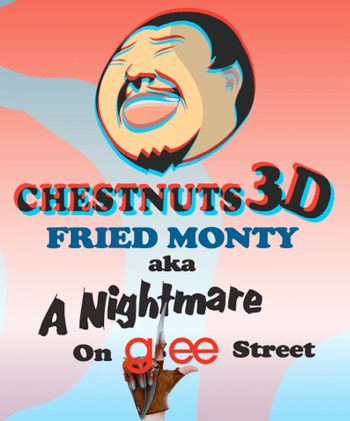

Nadal vs Federer. Kobe vs LeBron. Mayweather vs Pacquiao. Contador vs Schleck.
Chestnuts vs Vlee?
Not that we’re trying to conjure up some kind of perceived rivalry here, but it’s hard to ignore the similarities between two of Singapore’s biggest current sketch-comedy-parody shows, especially so since both productions decided to hold their annual runs at around the same time this year (i.e. late August, early September), thus resulting in the inevitable overlap of hot topics of satire.
In one corner, you have the old, er, chestnut helmed by comic genius Jonathan Lim of Stages, who has been faithfully chugging away at the “Chestnuts” series for 14 years now and has grown for himself an admirable cult following of the series.
In the other corner, you have the relative upstart called the “Vlee Conference” (helmed by wonderlady Irene Ang), formerly known as the “V Conference”, now into its 4th year.
This year’s line-up for “Chestnuts” includes Jonathan Lim, Dwayne Lau, Rodney Oliveiro, and Judee Tan, and the line-up for “Vlee” consists of Irene Ang, Chua Enlai, Shane Mardjuki and Brendon Fernandez.
Comparisons are inevitable.
First things first: “Vlee” loses major brownie points in my book because the name is just so unpronounceable.
Never ever start a word with the letters “V-L”, ever.
There’s a reason why the term “vlog” never caught on.
(Relax…just kidding, folks!!!)
Ok jokes aside…
Both happen to utilise only four cast members, one of whom is female.
Both are wacky, zany, irreverent, all-out-for-laughs sketch-comedy shows which aim to poke fun at anything and everything pokefun-able in the last year, both within our shores and beyond.
Both have their moments of utter hilarity, based on the various reviews (here), (here), (here), (here) and (here).
Both happen to be running at this particular time of the year (“Chestnuts” used to traditionally do a year-end run, but decided to do theirs in Aug-Sept this year, presumably because there were just too many topics to spoof this year that they just had to let it all out by Sept).
Both are positioning themselves to be the must-catch annual local comedy-spoof event.
As such, it seems that both shows might very well be taking aim at the same niche market – young, urban theatre-goers who happen to have a craving for wickedly hilarious and witty comedy of the satirical sort.
While “Chestnuts” took potshots at Kit Chan, Dick Lee, Glee, Pangdemonium Productions, Ip Man, Inception, Ris Low, etc this year, “Vlee” took potshots at Tiger Woods, Jack Neo, cross-Causeway politics, Tom Jones, the YOG, etc.
So…is it “Chestnuts” or “Vlee”?
Who’s better? Who’s funnier? Who’s more entertaining?
Who cares?
When we have two deliciously-funny sketch-comedy series currently in “full steam ahead” mode to look forward to every year, it’s fans like us who win out in the end.
(NB: I only managed to catch this year’s “Chestnuts”. Won’t be able to catch “Vlee”.)
“Poop” by The Finger Players

Event: Poop
Venue: Esplanade Theatre Studio
Run: 2nd Sept – 5th Sept 2010
Still can’t get over the name “Poop”.
Anyhow…
In a similar fashion, the play was as unique, quirky, and provocative as the title seemed to suggest.
This was my first Finger Players production ever, and I came away being highly impressed by the 60-minute spectacle.
This is a restaging of the play, after its initial run in April-May last year, which garnered for itself up to 5 nominations in the Life! Theatre Awards this year.
To simply call “Poop” a “play” might be doing a slight disservice to the production, for director Chong Tze Chien cleverly merged elements such as black art, intense soundscapes, clever lighting, and even shadow puppetry into its fabric.
“Poop” was quite simply a tour de force.
From the moment the play started, with the illusion of Daddy floating in mid-air amidst the darkness of the theatre studio, simulating a free fall towards death (suicide), you knew that you were in for quite a ride.
The play made heavy use of black art (i.e. creating visual illusions via manipulation of light and darkness, with people dressed in black manipulating the necessary props in front of a black backdrop), especially in portraying the spirit of the dead father reappearing to his family, most often with just the appearance of his floating head amidst the darkness.
The effects were most certainly magical, which tied in very nicely with the themes of hallucinations, spirits, and the afterlife.
Essentially, in my personal interpretation, the play was about the way a man’s family (namely his mother, his wife and his daughter) copes with his suicide.
To me the most poignant moment was when Neo Swee Lin (playing the Granny) and Janice Koh (playing the Mummy/daughter-in-law) were entertaining the possibility that there would be absolutely no connection left between them should both the Daddy (Mummy’s husband) and Emily (Mummy’s daughter) leave this earth.
As such, the wife contemplated moving back to Malaysia should Emily die from cancer.
I wouldn’t say that I was able to follow every bit of the play, especially during the more abstract moments.
(I’m really bad at grasping the abstract. I think I’m too literal in many ways. Gotta blame my over-consumption on musicals for that!)
Talked to a few people after the play and they seemed to think it was brilliant and had many interpretations on what was happening.
Apparently the rest of the audience in attendance this evening loved it too, judging by the rousing applause given at the end of the 60 minutes, plus the handful of standing ovations to boot.
The only comment I would possibly make about the play was that while it had its fair share of humourous lines, I thought the humour was misplaced due to the sombre tone that was set by the play right from the beginning.
As such, few in the audience were inclined to laugh, even though the lines may have had a bigger impact in a lighter setting.
I’m a firm believer that the impact that lines have on an audience is a function of the tone of the play, and the attempts at humour in “Poop” just seemed a bit out of place in a play that dealt heavily with the grim struggles and realities of a death in the family.
In conclusion, I would highly recommend you go catch “Poop” (if you can still get tickets), because it is truly a work of art and a sight to behold.

 Buttons In The Bread