Singapore Arts Fest 2012: Ilkosa’s sum-up

As the dust settles on the Singapore Arts Festival 2012 and its 2013 hiatus begins, thought I’ll just do a short summing up of my personal thoughts of the SAF this year.
The Theme: Our Lost Poems
Quoting the brief description:
“Our Lost Poems looks at myths, legends, wandering thoughts, reflections, lost riddles and hidden stories.”
From the eight programmes I caught, and others listed, I guess the “myths and legends” portion was probably the stronger theme this year. But on the whole, I didn’t feel that it was that clear. It could be the use of “Poems”, which if I didn’t read the description, I would have found little relation.
What I Caught
Of course, catching this many shows this year, which might be the most for me over the years so far, I can’t help but give them a ranking of sorts. I believe the least satisfying show for me would have to be Pandemic. My fave was Lear Dreaming with its fusion of cultures, which isn’t always easy to achieve, and how it rests on you. The Wind-Up Bird Chronicle comes in second out of the 8 programmes for its dream-like landscape.
I tried more experimental/interactive stuff this year as compared to previous years, and out of the three, i.e. Pandemic, Songbird and Hotel Maids, I liked Hotel Maids best for its subtlety and surprise at the end. Songbird was nice and the process fun, but the story/ending a little disappointing.
It’s a tougher choice for the musical ones, Flight of the Jade Bird and Rite(s) of Spring.
Flight was a tad too long but it had its moments, despite, I feel, it not reaching a higher climax.
As for Rite(s), I had been wanting to listen to Orchestra of the Music Makers (OMM) for some time, and Rite(s) was a good opportunity. Despite the young age of the musicians (average age of 21 years!) and being a volunteer orchestra, the orchestra boosts a good pool of musicians that bodes well for our classical music scene. And of course, Qin Li-wei is always good to watch and listen to, even though I’m usually not that attuned to the cello. The concert also heard the premiere of Ho Chee Kong’s Passage-Fantasy for Cello and Orchestra.
What I didn’t catch
There were 2 shows that I regretted not watching this year.
One was A Language of Our Own (which Jeremy caught). I had intended to watch this, but somehow, I was eventually too late to get the tickets. I felt it really wasted. I should have bought tickets to this rather than Very Wagnerian Night.
Another that I didn’t manage to catch was The Book of the Living and Dying. I’m a fan of Chong Tze Chien, but alas, the seats were fully registered within half an hour. How crazy was that! Jeremy was lucky to get a ticket to its preview (*envious*).
Thoughts of the Arts Fest – past, present and the future
I don’t know how long I’ve been following the Singapore Arts Festival. Was it since my secondary school days or JC days? I can’t recall, but I know it’s been a while, and I’ve been especially active in attending the performances since I started work (can afford more shows mah).
How has SAF evolved since? I heard comments that it has lost its “glam” factor in recent years. I guess it has in some way. Well, I believe it is due to a number of factors. I don’t know, but I used to feel that there were more “wow” shows and it was a scramble for tickets. Personally, I felt the SAF used to be THE arts festival of the year but maybe due to our arts scene becoming more vibrant and having a variety of festivals, that factor has kind of diminished. It’s not a bad thing actually, as it means Singapore has matured artistically and culturally.
For shows, I felt they are getting more and more “experimental” and abstract, even to some, fringe-like. I believe some of us still like some “conventional” form of theatre, dance and music which are more easily understood. So it has to be a balance. For me, I think the last more memorable SAF was probably 2 or 3 years back where most shows picked would ensure some form of satisfaction, even if I didn’t fully comprehend them.
Also, I used to feel that the SAF was the time for the major art forms to converge at a single festival and each distinct and strong in their own way. In most festivals, each usually focuses on one art form, like dance festival, music fest, etc. But SAF was where it felt all-rounded. Maybe my focus has changed or there are so many programmes now that I’m lost.
The SAF has also moved more “community”, I believe, as an outreach and an assimilation into society. I believe the idea is that arts should be inculcated in our everyday life in all communities. I think that ideal is good. So now, it boils down to – what is the purpose of the Singapore Arts Festival now?
I believe the hiatus is for that reason, to find direction for SAF. Over the years, I believe the purpose of SAF was to promote arts and culture and to change the arts climate in Singapore as we develop into a more developed society (besides a tourism factor). In a way, I think Singapore is already on track for that, so what should the SAF focus on now? How would the Arts & Culture Strategic Review (ACSR) influence its direction? We’ll find out in 2014.
Free Ticket Giveaway to “Lord of the Flies”!
 Event: “Lord of the Flies” by SRT’s The Young Co.
Venue: DBS Arts Centre
Run: 25th – 28th July 2012
3 Pairs of Tickets to be Given Away!
Next month, the Singapore Repertory Theatre’s The Young Co. will be staging the acclaimed play “Lord of the Flies”, based on Nobel Prize Winner William Golding’s celebrated novel.
The Young Co. is a two-year educational platform for 16 to 25 year-olds, and is the Singapore Repertory Theatre’s investment in future stage talent.
The kind folks at the SRT have been so generous as to give away 3 pairs of tickets to go catch this incredibly powerful piece of theatre.
To win a pair, all you have to do is leave a comment below answering the following:
“In 25 words or less, tell us why you’re dying to catch The Young Co.’s “Lord of the Flies”.”
The top three most creative and entertaining responses will receive a pair of free tickets each for the 26th July show at the DBS Arts Centre.
Contest closes 25th June, and winners will be notified via email.
Time to get creative and all the best everyone!
SAF 2012: Lear Dreaming

Event: ‘Lear Dreaming’ by Ong Keng Sen (as part of Singapore Arts Festival 2012)
Venue: SOTA Drama Theatre
Run: 31 May & 1 June 2012
Main cast: Umewaka Naohiko, Wu Man, Kang Kwon Soon, Piterman
A familiar sight greeted me as I found my seat in the first row. Although rusty in my knowledge of gamelan, I recognised the familiar instruments of the slenthem, kenong, gongs, rebab?, among others. It was an ensemble from Solo, and in expectation of a fusion of cultures, we were exposed to a contemporary interplay of traditional Asian art forms and languages – Japanese Noh theatre, Chinese pipa, Korean junga, Minang music-dance-theatre and Indonesian gamelan.
As the show is titled, the story is set in the context of King Lear’s sleep of death, as he reminisces on the folly of his ways which led him to lose his kingdom to his daughter. The whole stage set-up was pretty minimalistic, with 4 actors, black and white tones and a sparse stage. But that was all that was needed as the weight of the show laid itself on the audience and all were focused on what transpired onstage, with no distraction, whatsoever. The show was intense with notes of betrayal, cruelty and regret, but there was also loyalty and love. The cast was wonderful with their portrayal and skill, all expressed in their own specialised art forms.
One of the amazing things that struck me was how perfectly the cross-cultural traditional arts were blended together. Somehow, you couldn’t really tell the difference between the art forms, even the differences in language used, but yet, they still maintained their distinctiveness. Strange isn’t it? This is what real fusion and synergy is about, where nothing is lost and something even more holistic comes out of it. And even though they all involved traditional art forms, the performance was not dated but actually felt relevant. Beautiful. As Ong Keng Sen says in the post-show dialogue, this version was more about the human spirit than anything else. And although I didn’t watch the previous version (which I heard was quite different), I believe this is a matured version that completes the first. As he puts it, society is losing its “layers” and what we have these days are the top or superficial layers. We’ve lost the depth and spirit of old and I believe his approach to this fusion of fading cultures helps to bring us back to our roots.
Just to add, I must admit that I was a little uneasy or frightened by the first appearance of Umewaka in the Noh costume, mask and movement, probably because I was unfamiliar to it. However, I got used to it as the show progressed, and curiosity took its place. I stared hard at the masks (he plays two characters) and wondered if he could see through them, especially for King Lear’s mask. Also, I nearly gasped when he fell stiff flat on his face in portraying King Lear’s death (now I know the reason for the ring of gold in front of the mask).
I’m glad I caught Lear Dreaming, for I believe this was the best production I caught out of the rest that I did go for. The only grouse I had was how tiny the English subtitles were (one of the smallest I’ve seen), especially when I was unexpectedly seated in the 1st row (how did row C end up to be the 1st row?). Fortunately the surtitles didn’t move that fast due to the nature of the speech in the show, but I think it would be hard to read for those who couldn’t see so well.
SAF 2012: The Wind-up Bird Chronicle

Photo credit: Tom Kincaid
Event: ‘The Wind-Up Bird Chronicle” by Stephen Earnhart & Greg Pierce (US) (as part of Singapore Arts Festival 2012)
Venue: Esplanade Theatre
Run: 25 & 26 May 2012
What struck me first, even before the show started proper, was the musical set up and instrumentation, not to mention the live musician, Bora. With water tanks, bowls, and other interesting devices, together with piano, Bora created a soundscape, as well as immersed herself in the production as her movements and sound works blended and became as one with the performance. And there, we were introduced to a mystical landscape where the aural experience was equally important to the immersion of oneself in the play as the story played.
The story tells of the unemployed Toru Okada who loses first his cat and then his wife, Kumiko. As one of the characters, May, pointed out, it was indeed strange that he did not report to the police even after his wife had disappeared for four days. It makes one wonder that though he was worried, he subconsciously knew the reason?
What followed was a fully surreal experience with multimedia, bunraku-style puppetry, shadow play and soundscaping, as we were brought into an alternate reality, dream-like. We watch the characters intersect and commune, how some mysteries might have been better left unsolved. How someone whom you thought was closest to you wasn’t really whom you thought she was, or how you had seen the signs but ignored it. And how there were many subtle references and layers, as memories come and go, of relationships, history, society and politics.
It was interesting that after all that, the whole production was brought back to reality as we see settlement at the end for Toru, and even May. The atmosphere change was distinctly felt and we are released from the transfixion of what passed. You begin to wonder if what transpired was real, or which part was reality and which part was dream. And if it was only a playing out of Toru’s own random thoughts. The old soldier, the bat, the well…were they metaphoric in a way as well?
The Wind-up Bird Chronicle was spellbinding in a way that it held the audience captive by design, especially through our senses. In a way, I felt it winded up making us pretty wound up in a mind of speculation.
SAF 2012: They Only Come At Night – Pandemic
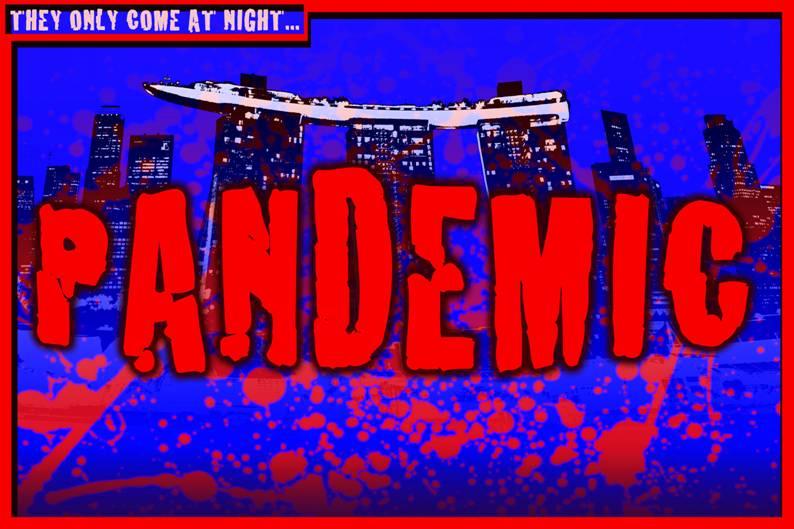
Event: ‘They Only Come At Night : Pandemic’ by Slung Low (UK) (as part of Singapore Arts Festival 2012)
Venue: Old School @ Mount Sophia
Run: 22-27 May 2012
The synopsis piqued my interest, and with my own intrigue of vampires (thanks to “Interview with the Vampire”), it was with great anticipation that I went into vampire town (or so I thought) at Old School.
The story goes that us participants are the last survivors of a vampire pandemic (think “I Am Legend” maybe?), and all are gathered at the last human stronghold known, Old School. We were given light sticks, a map of “safe” areas and a transmitter (to hear dialogue from the actors). Following the marked-out route, we were shown little alcoves once holding refugees or make-shift living spaces, but where the safety barriers were breached and fake blood splashed here and there, with personal effects strewn haphazardly. Soon, we all ended up in the atrium where the performance began with the vampire hunters and the discovery of Chester Rickwood, the miraculous last survivor from the last commune based here, and who was by now hopeless. And so the actors start debating on their stand and measures to make this last stand, and the participants have to decide who to trust as the onset of vampires was imminent, with us being the big buffet. We were eventually led to the upper deck of the main hall to be seated, and where the last leg of the performance was carried out.
However, I was a little disappointed at how the whole thing turned out. Granted, maybe I was expecting something different, but I barely felt the “pandemic” going on, aside from the really warm and humid weather. No scary vampires too at that. It could be my fault that I had half-expected some “vampire” to appear at some point to scare us, but nothing of that sort, just some dark figure dashing here and there and a fight in shadow play between the hunters and vampires. The performance ended quite abruptly and I was like “was that it?”. I think most of us wasn’t sure that it had ended when it did or knew what to do after that until we were given the cue to leave.
I guess it was a mismatch of expectations for me and maybe the buildup wasn’t enough for us to sense the urgency or identify with what was happening or the characters. We were asked to look out for clues, but exactly to what end, I do not know. One thing also was it was never fully explained why more time was needed (for Chester?), which led me to think that maybe the show was more about overcoming one’s own fears and facing them, as did Chester eventually. But I thought the use of the transmitter was pretty savvy to surround us with the going ons, though more could have be “injected”.
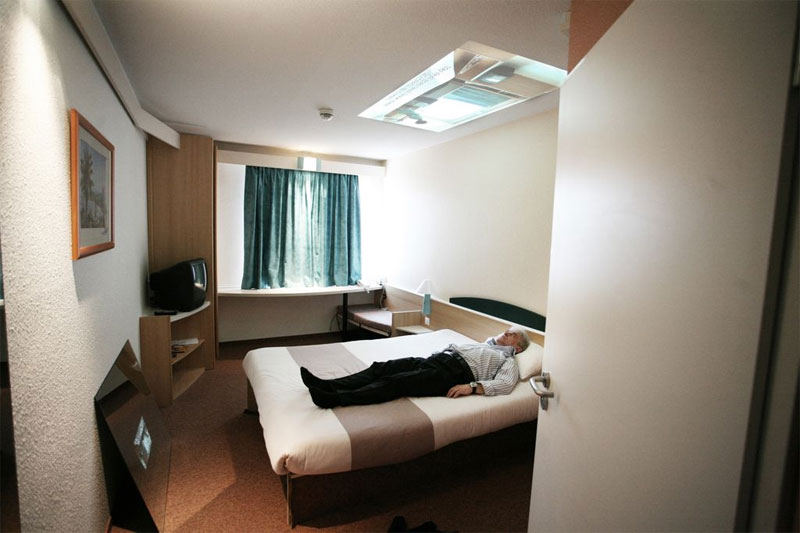
Photo Credit : Marta Pruska
Event: ‘Ciudades Paralelas (Parallel Cities) – Hotel Maids’ by Lola Arias (as part of Singapore Arts Festival 2012)
Venue: ibis Singapore Novena
Run: 18-20 May, 22-27 May, 29 May-2 Jun 2012
You are given five keys. Each key leads you to a room, different, yet the same. The only difference would be that each tells the story of a chambermaid from another (ibis) hotel elsewhere in the world, the city silently indicated by a tag under the clock, set in their respective time zones. And so, we take a peek into the lives of so many whom we do not see, yet their presence is seen and felt when we return at the end of the day, to a room tidy and clean. In a way, we are introduced progressively into these people’s lives and daily operations.
First, you are greeted in a standard room by just a handwritten letter left on the writing table by a staff. Then, you are “brought” to Warsaw with a representative mess (a tower of towels on the bed) of what one may find in a guest’s room, as a chambermaid talks on the TV. And guess what, there was something under the bed, as directed by her for us to go peek! We move on to Zurich as we get to know an Algerian deaf-mute chambermaid through her photos, journal and decorated room of the 3rd room, as well as a short video of her. The next room “forces” us to lie on the bed to watch on the ceiling, how a male chambermaid in Berlin goes about his chores and his life there. And lastly, the most striking, was when you open the door and step onto a “beach” with a room covered with sand, complete with seaside umbrella, as the voice of a male chambermaid from Jinsha, working in Singapore, tells his story and experiences. The stories speak mainly of how they came into this profession, about their family, their life stories and their life cleaning guest rooms like how they’re paid, things they’ve seen, etc.
Although the whole experience felt relatively subtle, Parallel Cities lets us catch a glimpse of similar contexts across the globe in different cities, and captures the lives and perspectives of people in the most ‘ordinary’ of circumstances which we would otherwise hardly notice or take for granted.
What I liked was how it maintained the “invisibility” of the chambermaids as one moves from room to room, and in the same way, we experience it like them. It felt like we’re looking into the secret life of these people. And I really liked the ending which came as a surprise (*SPOILER*), when the said person in the letter from the first room, Xiao Hong, appeared at the door of the last room to take me around to their work areas. And I knew that it was her when she touched her ear, as was the indicated “code” in the letter, where it stated that if we ever met her, touch our ear to acknowledge that we have read the letter. That was a nice touch and it really brings them to life or we might miss them in our everyday going-abouts and take them for granted. They do help make our stay more comfortable when we’re away from home and we should appreciate them. They are real and human, like all of us.
SAF 2012: Very Wagnerian Night

Photo credit: Mats Bäcker
Event: ‘Very Wagnerian Night’ by Charlotte Engelkes (as part of Singapore Arts Festival 2012)
Venue: SOTA Drama Theatre
Run: 19 & 20 May 2012
Main cast: Charlotte Engelkes and Lindy Larsson
I should have known. It was Wagner after all and, with no disrespect to the composer, this felt just like how I would feel about Wagner’s pieces – a tad too long. Well, that’s another thing altogether because I don’t think his music was featured much anyway.
It was a play, or rather, storytelling in 3 parts, as part of Engelkes’ Wagner project The Very Ring, which, I believe, is essentially making reference to Wagner’s 4-opera ring cycle Der Ring des Nibelungen among other works. I’m not familiar with Wagner’s operas, but at least I did recognise one story, which was “Tristan und Isolde“. And it was really a collage of more text than song.
The first segment was “Miss Very Wagner” and has Charlotte going on as being the different heroines in the operas in the role of a (Greek) soprano who has a semi-god mother. The storytelling was rather narrative, and she relates what a good soprano would be and the heroine’s (usual) struggles. Unfortunately, I wasn’t as engaged as I hoped I would be as snippets here and there from the heroic stories were talked about. There were the occasional slight jokes, but you soon realise that the stories were relatively the same, or maybe that’s the whole point. Well, in a way, maybe that’s how stories in operas work. So it goes on and on.
However, despite not getting into the show much, I must admit Charlotte did have a good voice and my, how she worked the props. The pulleys, the sails, the many other hanging props which she moved and tugged around the stage at will as she spoke, and her versatile dress. That’s a lot of manual hard work.
The second segment of the trilogy “Siegfried – The Very Wagner Hero Hour”, was almost similar in style, but now with the focus on the hero played by Lindy Larsson (Charlotte plays the character’s mother). The segment is loosely based on Wagner’s third Ring opera Siegfried. In a similar style, though with less working of props, Lindy plays the hero who did not fear anything until he found love. Good voice too, but the way it was performed somehow reminded me a little of a child’s role-playing game with Siegfried constantly plagued by his mother’s shadow.
Segment three was the preview of “All Is Divine“, the final part of The Very Ring, and a result of a workshop with Singaporean artists that included familiar faces like Darius Tan and Celina Rosa Tan. It’s actually tied to Wagner’s Götterdämmerung, which is essentially a continuation of Siegfried‘s story. Unfortunately, by the time I reached this segment I was already quite tired and trying my best to stay focused on the show, which was slightly a bit more abstract I believe. I must apologise I can’t comment much on this segment as it just slipped past me due to my tiredness.
I guess this wasn’t really my kind of show or I was simply tired out at the end of the day. I did hear some of the audience enjoying it more than me though. That’s the end of the night for me.
Songbird
 Event: Songbird (as part of the Singapore Arts Festival 2012)
Venue: Various (starting point at the Esplanade Park)
Run: 24th – 27th May 2012
Gonna Find Me A Songbird
Every now and then you come across a gem of an artistic idea which seems fresh and unique, unlike anything you’ve ever experienced before.
“Songbird” is essentially an app-based interactive journey that allows you to trace the mysterious disappearance of a singer-songwriter named Songbird, and in the process gather more clues in the hope of solving this mystery.
The entire journey is only made possible with either an iPhone or an iPad, and the team at Studio Now & Then were kind and meticulous enough to make provisions to loan out iPad sets to non-Apple users such as myself.
The adventure begins at the rooftop of the Festival Cafe, where we are greeted with the unexpected no-show of Songbird, who was supposed to take to the stage for a performance.
From there, we constantly consult the sagely iPad to pepper us with morsels of information to aid us in our journey, whilst leading us to various checkpoints such as the Fullerton Hotel, the Stone Benches, the Limousine next to ACM, and The Arts House.
QR codes play an important role in this adventure in releasing to us the various clues, and while the majority of clues were in the form of well-enacted video clips, there was also the odd simulated phone call as well as simulated text messages between the characters in the story and us, the app users.
What I really liked about the entire “Songbird” experience was the sheer attention to detail.
You had the sense that Tara Tan and the entire team from Studio Now & Then had put in many painstaking hours attending to every single detail in the show – from the design of the sleek and intuitive app, to the filming of the various video segments, to the curating of the mini art gallery at the Fullerton, to the opulent limousine experience, to the construction of the exquisite white birdcages.
I also liked the concept of the “press conference” at the Arts House.
It was all these little touches and ideas which made the entire journey such a delight.
Another very clever touch that some might not have realised was that the “show” had already begun a few months ago, when Songbird released her debut single “Maybe” on YouTube. (Catchy song, by the way.)
All this was carefully constructed so as to create this seemingly authentic “Sherry” persona, which would later also receive some mysterious notes from a stranger in the days leading up to the actual performance.
But while the whole “Songbird” journey was physically and technologically engaging, I found myself being strangely detached on the emotional front.
I felt the story itself was somehow unable to draw the participant into it, and soon the whole exercise became more of a casual early evening stroll round the Civic District, visiting spots I would otherwise seldom explore, and looking out for checkpoints.
It came to a point where I was merely interested in visiting all the checkpoints just so we could scan the QR codes, view the clips and move on in the journey.
And as Corrie Tan had already mentioned, I found the ending rather disappointing, as it offered scant resolution to the entire story.
For a story that seemed to build and build, you would have expected a slightly grander finish.
I was half hoping that we would have eventually been treated to a little live performance from Songbird herself, as a small form of payoff for all the walking around the past hour or so.
That would have been a beautiful way to cap off the journey.
But it just seemed to me a bit odd to me that we never really got to meet in real life any of the virtual characters that we’d been conditioned to feel for throughout the journey.
It just made things all seem a bit unfulfilling.
Nonetheless, I found the entire “Songbird” experience to be both fresh and delightful.
Studio Now & Then is definitely on to something in terms of its concept and execution.
It’s got the hardware all figured out – from the all-important app to the hit theme song to the logistics to the branding, so now it’s just a matter of finding a way to fully engage the participant, and making the entire show a truly immersive one.
Only then could you say the show has truly learnt to fly.
男男自语 (A Language of Their Own)
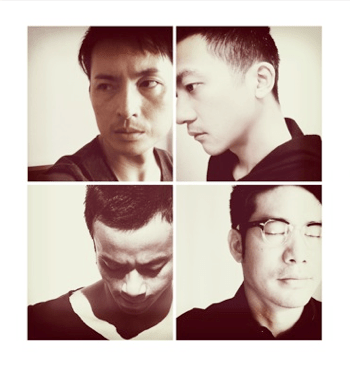 Event: “男男自语” – Translated from “A Language of Their Own” (as part of the Singapore Arts Festival 2012)
Venue: Esplanade Theatre Studio
Run: 18th – 20th May 2012
More Than Words
I thought long and hard about whether to post a review on this, because it was a Mandarin play with no English surtitles, and those who know me will know that my Mandarin isn’t exactly the best.
However, I’ve had quite a few thoughts on this play the past few days so I figured I’d better write about it, just to get it all off my chest.
“男男自语” – originally known as “A Language of Their Own” – was written in English by Singapore-born playwright Chay Yew (now based in the United States), and was first staged in New York in 1995, and then subsequently staged in Singapore by Checkpoint Theatre in 2006.
It has been translated into Mandarin by playwright and academic Robin Loon, and though the seed of the idea first appeared in 2006, it was only circa 2010 that the serious translation work actually began.
The importance of the concept of “language” in this play simply cannot be overstated, since it even features in the play’s title itself.
From the opening scene, which portrays a lengthy dialogue between Oscar (Nelson Chia) and Ming (Loo Zihan) with nary an overt gesture throughout the scene, we can see that this is to be a very dialogue-heavy play where the weight of the words are intended to take precedence over everything else.
Even stage directions such as a kiss and an embrace are merely depicted through words on a screen, and not physically acted out by the actors.
It might have seemed like an odd directorial decision, but all this was probably a deliberate effort to let the audience focus on the inherent lyricism and gravity in the text itself.
And if we were to bring in the whole notion of the entire script having been translated from English into Mandarin, and in the process unearthing fresh rhythms and nuances from the text, then the concept of language takes on yet another dimension in this production.
Truth be told, I was able to largely follow the play, even though I might have been unable to grasp some of the intricacies of the translated text, either because they just flew by too quickly, or because they were just simply beyond my grasp.
“男男自语” tells the story of a pair of gay lovers Oscar and Ming, and how they are torn apart because of Oscar’s HIV virus, and how they continue to be tormented by the memories of this former relationship even while moving on to new partners.
Oscar goes on to meet Daniel (Robin Goh), while Ming goes on to meet Robert (Timothy Nga), although neither Oscar nor Ming seem to find eventual comfort or fulfillment in their new partners.
Most people would probably single out Nelson Chia and Robin Goh as the two standout performers.
Nelson Chia was the “emotional anchor”, as Adeline Chia so eloquently put it, while Robin Goh plays the campy and free-spirited new boyfriend of Oscar.
It also didn’t hurt that both of them seemed to be the two who were most comfortable articulating in Mandarin.
I’ve heard from various sources that many who had witnessed “男男自语” were moved to tears by this production, although personally, I did not find myself coming close to tears for some strange reason or other.
It could perhaps be attributed slightly to my relative unfamiliarity with Mandarin.
I did, however, feel most sympathy for Daniel, whom I believed would have made a fantastic partner for Oscar, had it not been for the fact that Ming had already come before him and had left an indelible mark in the life of Oscar.
Right man, wrong time perhaps?
The moment at the end, when it was revealed that Daniel himself had also contracted HIV, was heart-wrenching to say the least.
The overall script was as eloquent, lyrical, profound and evocative as the best of Brahms’s symphonies, although one might stop short of comparing the collective performance to a well-played string quartet, due to the uneven acting amongst the four actors.
I’ve never seen the English version of this play, so I am unable to delve into the differences in nuances between the two versions.
And although the idea of language is of the utmost importance in this play, ultimately “男男自语” or “A Language of Their Own” isn’t so much necessarily about the language of the written word, or of racial background, or of sexual orientation.
It is, for all intents and purposes, about the language of love.
SAF 2012: The Flight of the Jade Bird
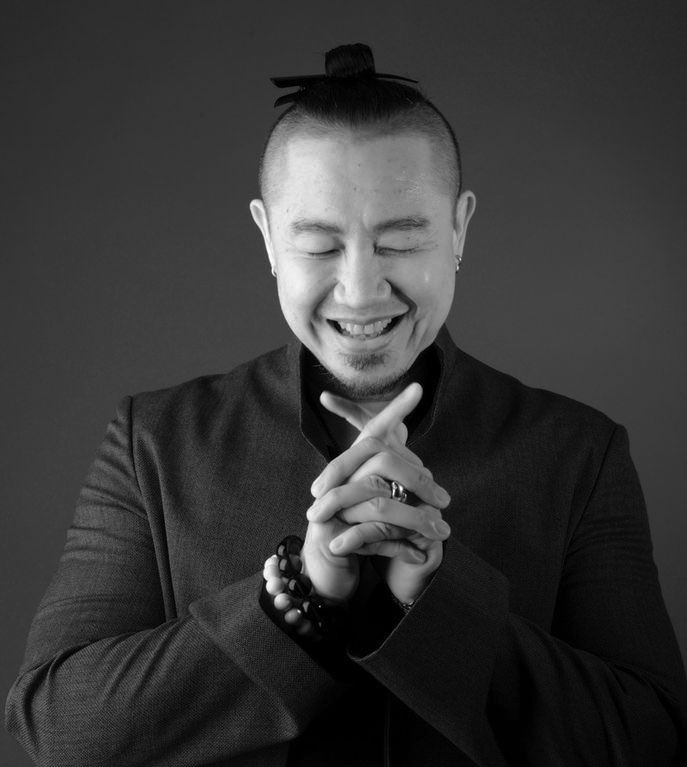
photo credit: Alex Chan
Event: ‘The Flight of the Jade Bird’ by Mark Chan (as part of the Singapore Arts Festival 2012)
Venue: Esplanade Concert Hall
Run: 18 & 19 May 2012
The Flight of the Jade Bird tells the story between the Jade Bird and a boy, the bond between them and a tale of loss and choice and sacrifice, and what is important in life. It is a fable set to stage in two acts – “Act 1: The Palace of the Jade Bird” and “Act 2: The Land in the South, Then Return to the Palace of the Jade Bird”, and I would say good fodder for a musical piece. And it was quite a stellar cast.
As the story unfolded, I couldn’t help but feel that it was a strange mix of being a mini orchestral performance, a musical, an opera, storytelling and dance. Strange in a way that it couldn’t decide what it wanted to be out of all these. The artists were great in their own domain, executing the performance with style and precision, but somehow, for most of the 1st act, it felt discordant, as if each were trying to stand out on its own. For one thing, I felt that the lyrics didn’t quite fit in the way it was sung (opera style), or something about it. Though I wouldn’t go as far as to say it was “jarring”, but it kind of made the experience disruptive. At some point, I wondered if having Chinese lyrics would have made a difference. After all, the music and context seemed very Asian. Despite all these, it was a relief that things got a bit better past midway of the 1st act and the performance finally began to take some form in the piece The Long Flight just before intermission.
In contrast to Act 1 which felt a bit draggy (at almost 1.5 hours), Act 2 picked up speed as the storyline progressed quicker along with the music. The discordant I felt in the 1st act was much diminished and everything seemed to fall into place as all the facets blended together and brought the show to a climatic end. A friend of mine commented that the range was not wide enough and indeed, a higher note to the music would have brought the piece to greater heights and reach a better climax, you know, more conjuration of inspiration, adventure and emotions. I would have loved to hear the counter tenor (Phua Ee Kia) reach higher, as I felt he was not optimized to his full potential.
I believe one of the highlights for me was when the dance took centre stage at certain points in the show. For most parts, it was more set in the background, but when Mui Cheuk Yin took the centre stage as the Jade Bird, she mesmerized the audience. Incidentally, I believe these were the points when the story somehow took shape. I remarked to my friend if only we could have seen more. And I believe special mention has to be made of the young Matthew Supramaniam, the boy soprano who sang the Boy part. Although there was unsteadiness initially at the beginning of the show, he warmed up soon enough and performed beautifully with his crystal clear voice and pitch.
To mark it all, a moving thank you speech was given at the end by Mark Chan, who expressed his heartfelt gratefulness for all the artists, and the history behind each of them. I found that very sweet and wonderful to know how the production came together.

 Buttons In The Bread